
Fantasy AI: RP & Companions
LYRASOFTEntertainment
4.6458.00 Reviews
- Version
- 2.5.3
- Installs
- 100.00K
- Age Rating
- Mature 17+
Screenshots


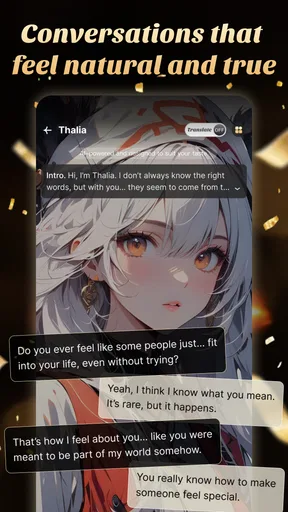

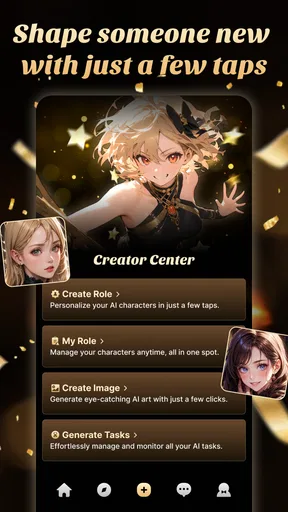
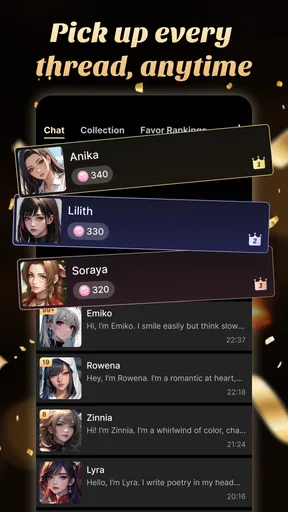

Our Review of Fantasy AI: RP & Companions
 Analysis by Appyee
I approached Fantasy AI: RP & Companions as an entertainment app for people who want to chat with fictional personalities and explore imaginative settings rather than follow a fixed story. Its appeal is easy to understand: instead of choosing one finished film, game, or novel, I can take part in a conversation that changes with my prompts. The experience sits somewhere between creative writing, character roleplay, and casual company.
That flexibility is also the main thing to evaluate carefully. A roleplay chat can be relaxing, funny, dramatic, or surprisingly absorbing, but the quality depends heavily on how clearly I describe what I want and how willing I am to guide the conversation. LYRASOFT presents this as a fantasy-focused AI experience with companion creation and artwork, and I found that the strongest use is not passive entertainment. It works best when I treat it as a creative tool that needs direction.
How the app feels to read and navigate
The first practical question for me was whether the app makes its central purpose obvious. It does: the combination of character conversations, fantasy settings, and visual creation gives the product a recognizable identity quickly. I did not have to guess whether it was primarily a messaging service, a game, or an art editor. It is an entertainment app built around AI roleplay, with the conversation acting as the main doorway into the experience.
That clarity matters for people who may find busy interfaces tiring. When an app mixes chat, character discovery, creation tools, and artwork, it can become difficult to understand what deserves attention first. Here, I would recommend starting with one companion and one simple scenario instead of trying to explore every creative possibility immediately. A narrow first session makes it easier to learn the rhythm of the app and decide whether the style suits you.
Text-based interaction is naturally easier to scan than a fast action game or a screen filled with constantly changing controls. I can read a reply, pause, and decide what to write next. That pause is useful for anyone who needs more time to process information, compose messages, or recover from visual overload. It also makes the app more approachable than entertainment that depends on quick reactions.
At the same time, conversational interfaces can become mentally demanding when the story grows complicated. A long roleplay may contain several characters, relationships, locations, and promises made earlier in the exchange. If I return after a break, I may need to reread the conversation before I know what is happening. My practical solution is to keep scenarios focused and occasionally write a short in-character recap. That helps preserve continuity and reduces the effort of reconstructing the plot.
The app is free to install and use, while optional purchases range from $3.49 to $59.99 per item. That pricing structure makes it especially important to notice what is available during ordinary use before becoming invested in a particular creative routine. I would begin with short sessions and avoid paying simply because a conversation has become emotionally engaging. The best test is whether the free experience already supports the kind of roleplay I actually want.
Readable conversations need deliberate pacing
For me, the most readable way to use the app is to send compact prompts with one clear purpose. Instead of combining a setting change, three character actions, a mood shift, and a request for artwork in one message, I get better control by separating those steps. This is a small but meaningful workflow improvement: shorter instructions make it easier to see which part of the request influenced the reply.
I also find that descriptive prompts can be easier to review when they follow a repeatable pattern. I might state the location, identify my character’s intention, and then specify the tone I want. That structure is not a formal requirement of the app, but it helps me keep the exchange understandable. It is particularly useful for readers who find unstructured writing tiring or who want to return to a scenario later without deciphering a dense block of text.
The fantasy theme can help readability because it gives prompts a strong visual and narrative frame. Saying that a conversation takes place in a quiet observatory or an old coastal city is more useful than writing a vague request for “something interesting.” The setting gives the AI a direction and gives me a mental anchor while reading the response. In practice, this makes the experience feel less like an empty chat window.
Motor and sensory considerations during use
From a motor perspective, the app’s conversational format is less demanding than entertainment that requires repeated tapping, rapid swipes, or precise timing. I can type at my own pace and stop between messages. That makes it a better fit for relaxed use, one-handed sessions, or moments when I do not want to coordinate several controls at once.
However, typing is still a physical task, and long roleplay sessions can require a great deal of it. Someone who finds keyboard input uncomfortable may prefer shorter prompts, voice input supplied by the device, or a slower story with fewer exchanges. I would not describe the app as effortless for every user simply because it is chat-based. Its low reaction-time demand does not remove the need to enter text repeatedly.
There is also a difference between reading and creating. Reading a reply can be relatively passive, while building a companion or world asks for more planning and repeated decisions. If I am tired, I may enjoy responding to an existing character but not feel ready to design a complete scenario. That distinction is worth keeping in mind: the app can support different energy levels, but the creative tools may be more demanding than ordinary conversation.
For sensory comfort, the strongest advantage is control over pace. I can stop reading whenever I need to, and the interaction does not force me to react to a live event. That makes it suitable for quiet breaks, commutes, or winding down before sleep, provided the subject matter is appropriate for the moment. The mature age rating of 17+ is an important boundary here. I would not treat this as a general-audience companion for children or as a neutral app to open around younger family members.
Visual artwork adds another layer to the experience. It can make a fantasy character or setting feel more concrete, but visual creation is not automatically useful for every person. Some users may prefer to stay with text because images are distracting, visually intense, or less important to their imagination. My advice is to treat the art side as an optional creative branch rather than the measure of whether the whole app is worthwhile.
One helpful habit is to decide in advance whether a session is for reading, roleplay, or visual exploration. Mixing all three without a plan can make the experience feel cluttered, especially when attention or energy is limited. A reading-focused session might use one established companion, while a creative session could begin with a short world concept and end after producing one visual idea. Separating those goals keeps the app more manageable.
Why the fantasy setting helps some users
Fantasy is more than a decorative theme here. It gives people room to experiment with identity, dialogue, and storytelling without having to reproduce ordinary real-world situations. I can test how a character might respond to a difficult conversation, invent a setting for a writing project, or simply enjoy a dramatic exchange with no need to win or complete a level.
That makes the app potentially useful for people who enjoy imaginative communication but do not want the social pressure of a live community. I can revise a prompt, change direction, or pause without disappointing another person. The trade-off is that the interaction lacks the unpredictability and genuine mutual understanding of a human conversation. I would use it for creative rehearsal or entertainment, not as a replacement for real support or relationships.
Situational access in everyday life
A realistic use case for me is a short evening break after work. I might create a simple scene in which a companion and I are preparing for a journey, exchange a few messages, and stop when the story reaches a natural pause. That is more satisfying than endlessly scrolling because I am making something, but it is less demanding than starting a full game or committing to a long novel.
The app can also fit waiting time well. In a queue or during a quiet commute, I can continue a conversation in small pieces rather than needing a full uninterrupted session. The ability to pause is valuable for people whose schedules are unpredictable. I would still avoid beginning a complicated plot when I know I will be interrupted repeatedly, because fragmented attention can make the story harder to follow.
For writers and artists, the companion and world-building angle offers a practical brainstorming space. I can ask a character to react to a premise, explore different moods for a setting, or use a conversation to discover what kind of personality feels interesting. The useful insight is that the app is better at generating possibilities than delivering a polished final result. I would copy the strongest ideas into a separate notes or writing tool rather than expecting the roleplay itself to become an organized project.
It may also work for someone who wants low-pressure language practice through fictional dialogue, although I would keep expectations realistic. The fantasy context can make repeated exchanges more engaging than isolated exercises, but the AI may not always provide the precise correction or structured progression that a dedicated learning app offers. For formal study, I would choose the specialized option; for casual practice and confidence-building, this may be more inviting.
Travel and offline situations deserve some thought. Since the experience depends on interactive AI conversations and artwork, I would plan to use it where I have a dependable connection and enough battery for a text-heavy session. I would not make it my only source of entertainment on a long trip. A downloaded book, podcast, or offline game is more predictable when connectivity is uncertain.
The mature rating changes the situational advice. This is not something I would hand to a child for imaginative play, and I would be selective about using it in shared spaces. Adults who want fantasy roleplay should still set personal boundaries around themes, emotional intensity, and time spent in the app. A fictional companion can feel engaging precisely because it responds immediately, so occasional breaks are a sensible part of using it well.
Where the experience still creates barriers
The biggest barrier is not speed or visual complexity; it is the need to communicate clearly with an AI. If I give a vague instruction, the reply may move in a direction I did not intend. If I introduce too many constraints, the exchange can feel stiff. This means the app rewards users who are comfortable experimenting with wording, correcting a scene, and accepting that some responses will need steering.
That learning curve can be frustrating for people expecting a finished interactive story. Traditional games usually provide explicit goals, rules, and feedback. A novel provides a controlled narrative without asking the reader to manage it. Fantasy AI: RP & Companions sits between those models, and that middle ground will not suit everyone. If I want a polished plot with consistent pacing, a conventional story-based game or book is likely the better choice.
Continuity is another practical limitation. Even when a conversation begins strongly, an AI companion may not handle every detail with the consistency I want. I reduce that friction by keeping a small “story bible” in my notes: names, relationships, setting rules, and the current objective. I can paste a compact reminder when needed. This extra step is one of the clearest differences between using the app casually and using it for a serious ongoing world.
Emotional boundaries matter as well. The companion format can feel personal, but the interaction remains generated entertainment. I would be cautious about treating replies as reliable advice, especially for health, safety, money, or serious personal decisions. The app is at its best when I use it to imagine, play, and create. It is not the right tool for replacing a trusted person or professional service.
Cost can become a barrier for users who want extensive creation or who dislike purchase prompts in free entertainment. Because individual in-app items can reach $59.99, I would check the spending controls on the device and decide on a limit before exploring deeply. The free entry point is useful, but “free” does not necessarily mean every preferred way of using the app will remain free.
Finally, the app may not be ideal for users who need highly structured accessibility controls, carefully moderated educational content, or a predictable family-safe environment. I can make the experience more comfortable through shorter sessions, clear prompts, and personal boundaries, but those adjustments are not the same as a dedicated accessibility design or a child-focused product. Choosing the right alternative depends on whether the priority is creative freedom, structured support, or dependable simplicity.
My inclusive verdict
Fantasy AI: RP & Companions is a distinctive entertainment app for adults who enjoy interactive fantasy, character-driven conversation, and visual imagination. LYRASOFT has shaped it around a flexible idea rather than a fixed campaign, and that gives me more freedom than a conventional story. Its average rating is 4.6 from around 5.7K ratings, with more than 100K installs, which suggests that the concept has found a real audience. It was released on Aug 28, 2025, and version 2.5.3 supports devices running Android 7.0 or later.
I would recommend it to someone who likes writing prompts, improvising scenes, or exploring fictional companionship at their own pace. It is especially appealing when I want entertainment that can fit into five minutes or expand into a longer creative session. The free starting point lowers the barrier to trying it, while the fantasy focus gives the conversations more character than a blank general-purpose chatbot.
I would not recommend it to someone seeking a traditional game with clear objectives, a carefully authored story, or a fully structured creative workflow. I would also steer younger users away because of the 17+ content rating, and I would suggest caution to anyone who may find companion-style interactions difficult to separate from real emotional support. For those needs, a standard game, writing application, or human community may be a healthier and more predictable choice.
My best advice is to begin with one companion, one setting, and a short scene. Use concise prompts, keep a brief continuity note for longer stories, and decide whether you want conversation or artwork before each session. That approach exposes the app’s real strength: it gives the user control over the shape of the fantasy instead of forcing one predetermined experience. With realistic expectations and sensible boundaries, it is an enjoyable creative companion rather than just another chat window.
Verdict
Strengths of Fantasy AI: RP & Companions
- Large selection of fantasy characters and roleplay scenarios
- Customizable conversations support creative storytelling
- Available for casual chats as well as longer roleplay sessions
- Immersive character personalities make interactions feel engaging
- Useful for brainstorming plots, characters, and fictional worlds
Limitations of Fantasy AI: RP & Companions
- Some advanced features may require a subscription or paid credits
- AI responses can occasionally be repetitive or inconsistent
- Conversations may lose context during lengthy roleplay sessions
- Content quality varies depending on the selected character
- Requires an internet connection for most interactions
Similar Picks in This Category
View All
Google Play Games
Google LLC3.9

Netflix
Netflix, Inc.4.8

YouTube Kids
Google LLC4.2

Disney+
Disney4.4

Prime Video
Amazon Mobile LLC4.7

Steam
Valve Corporation3.2
Frequently Asked Questions
What is Fantasy AI: RP & Companions?
Fantasy AI: RP & Companions is an interactive AI chat app focused on role-playing and virtual relationships. It allows you to converse with fictional characters, create imaginative scenarios, and explore different personalities through text-based conversations. The experience is designed for entertainment and storytelling, rather than replacing real social interaction, professional advice, or genuine human companionship.
Can I create my own characters and role-playing scenarios?
The app is built around character-based conversations and role-playing, and users can generally explore a variety of personalities, story themes, and fictional situations. Depending on the current version, customization options may include adjusting a character’s background, behavior, or conversation style. Before downloading, check the latest app description because available creation tools and limits can change with updates.
Is Fantasy AI: RP & Companions free to use?
You can typically download the app without paying, but some features may be restricted by daily message limits, premium characters, subscriptions, or in-app purchases. The free experience may be enough for trying basic conversations, while frequent users could encounter prompts to upgrade. Review the pricing, renewal terms, and trial conditions in the relevant app store before subscribing.
Is the content in the app suitable for children?
Fantasy AI: RP & Companions may include mature themes, romantic interactions, intense role-playing, or user-generated conversations, depending on the characters and scenarios available. Parents should check the official age rating, content labels, privacy settings, and parental-control options before allowing access. It is also wise to remind younger users not to share personal information with an AI character.
Does the app protect my conversations and personal information?
Because conversations are processed through online AI services, users should read the app’s privacy policy before sharing sensitive details. Avoid entering passwords, financial information, private contact data, medical records, or anything that could identify you. The policy should explain how chats are stored, processed, shared, and deleted, while permissions and account settings may provide additional control over your data.
